


Picking the Perfect Used Car

Let’s face it shopping for a car sometimes can be overwhelming and that’s for new but what about used? There are so many choices when it comes to buying a used vehicle presently somewhat of a challenge. Purchasing a new car whether new or used should be a fun and exciting experience not a stressful one and we want you to drive away in the perfect car for you.
Follow this list of steps to help make finding your next car a breeze:
Step 1: How much car can you afford?
The general rule of thumb is that if you are taking out a loan to pay for your car, your payment should be no more than 20% of your take home pay. However if you are on a tighter budget you may want to be smarter and spend less, the last thing you want is to get yourself into something you can’t really afford.
Step 2: Build a Target List of Used Cars
If you are looking to save money consider all your options. Create a list of at least 3 cars that meet your needs and fall within your budget. If you are planning on buying a newer used vehicle as in only a few years old we suggest going with a CPO (Certified Pre-Owned). CPO vehicles have long term warranties backed by not just the dealership but also the Automaker itself.
CPO vehicles are only sold by Franchise dealerships that sell these vehicles brand new, for example if you are interested in an CPO Chevy Cruz, click here or visit us today and we’ll help you get into the best CPO Chevy for you.
Step 3: Check Prices
Prices will be a big part of the shopping process and this leads us back to the question how much can you afford? We will note CPO vehicles will usually be the ones to cost more but the reasoning behind this makes a CPO vehicle purchase far worth it. We’d love to meet with you and discuss all your options.
Step 4: Locate Used Cars for Sale in our Inventory
Visit our inventory to find any used vehicles that may match what you are searching for including our wide selection of CPO vehicles.
Step 5: Check the Vehicle History Report
Unless you are buying from a close friend or family member who can vouch for the vehicles history, we recommend reviewing the Vehicle History Report. The Vehicle History report is something we will provide you one with for any used vehicle you may interested in.
Step 6: Contact Us
Once you have laid your eyes on the used vehicle that you are interested in, give us a call or stop by to verify that this vehicle is still available. If you like what you see at this point, continue on with a test drive and verify the cars condition in person. We want to make sure you love it.
Step 7: Have the Car Inspected
If you like the car and it is not a CPO, feel free to have it inspected or we can verify inspection with service. If the vehicle is a CPO then an inspection and warranty are already in please so there is no reason to take it to a mechanic.
Step 8: Negotiate a Deal
Step 9: On to the Paper Work
Once paper work is completed, make sure you have insurance on the car before driving it away. Now, it’s time to celebrate as you have purchased the perfect used vehicle for you!
Keeping Your Car Cool This Summer
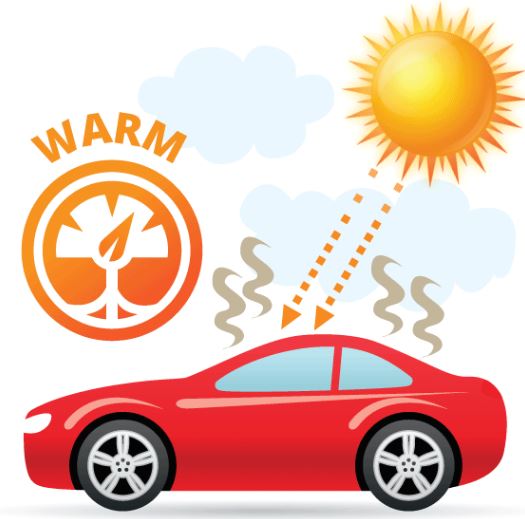
Summer is here and that means warmer weather and sun baked cars when you get in them after a long work day. I mean, let’s face it we all know how it feels to sit on blazing hot leather seats after your car has been sitting for a while. It burns literally, ok maybe not literally, but you catch our drift.
Follow these tips to keep your car cool during hot summer days.
1. Use a sunshade or window visor
This tried and true method for keeping your car cool, should be your go to option. Just put the shade up every time you exit your vehicle for more than a few minutes and you should be good to go!
2. Use a dash cover
If you did not already know a fabric or upholstered dash cover can go a long way in keeping your vehicle more comfortable during the hot summer temps. A dash cover will keep you from feeling overwhelmed by the heat radiating off your vehicles interior.
3. Cover your steering wheel with a hand towel
Even with a sunshade it’s still a good idea to cover your steering wheel with a small towel, just in case. This will help ensure that you can actually touch your steering wheel upon driving your vehicle.
4. Park in a shady area
Another tried and true option, whenever possible always park in a shaded area. Trust us when we say it’ll be far worth it even if you have to park far away.
5. Keep any possessions out of the sun
Any delicate items that you may keep in your vehicle like CD’s, headphones, sunglasses etc. should be stored out of the sunlight. Use your trunk, glovebox and or even as a last resort throw a blanket over your possessions to shade them.
6. Park in the Garage when possible
This should be an obvious if you have a garage, park in there as your vehicle will be kept out of direct sunlight and benefit from consistent shading.
7. Keep windows slightly cracked
Keeping your windows slightly cracked with help with ventilation leading to a cooler vehicle. If you do this, make sure you are unable to fit your arm through the crack.
8. Throw blankets over your seats
If your car has vinyl or leather seats then you know firsthand how hot your seats will get when exposed to direct sunlight. To keep seats cool, place a blanket or towel over the top of them.
Spotlight on the 2017 GMC Acadia

The GMC Acadia has been one of the largest crossover SUV’s that you could buy, up until now. For 2017 GMC decided to significantly reduce the Acadia’s size and weight. As a result the Acadia is now the true midsize crossover SUV it was meant to be all while still offering all the amenities of a larger SUV; including seating for seven and lots of cargo space but more fuel efficient.
The Acadia has become the jack of all trades and is ready to tackle the trails and or car pool lanes none the less. Quality meets expectations for the price point with spacious comfortable interior and available technology options like touch screen infotainment with Apple CarPlay, Android Auto, 4G LTE connectivity and mobile Wi-Fi.
It’s refreshingly right sized, lighter and more maneuverable providing a new attitude on the road. The Denali remains the top of the line luxury model but if you are looking for more off road capability there is a model for you too with the All-Terrain trim level. This V6 powered All Terrain uses a different AWD system, which provides more traction for all surfaces and improved climbing hill capability. Prices for the Acadia start at 30k and with pricing like this it makes for a very affordable and perfect SUV for you and your family.
Get Connected, Flexible and Functional with the all new refreshed 2017 GMC Acadia.
Wiper Blades 101

Visibility is fundamental to safe driving. Although drivers depend on their vehicles’ wiper blades to clear away rain, sleet and snow, many wait to replace them until they need them the most. So remembering to maintain wiper blades regularly can maximize visibility, efficiency and reliability.
Wiper blades should be replaced every six months to a year or as soon as you notice a difference in driving visibility. When wiper blades no longer make proper contact with the windshield surface, they can begin to squeak, chatter, skip, smear or streak reducing driving visibility.
When inspecting wiper blades, look for the following:
• Broken frame – detachment of frame arms at joints or connection points.
• Metal Corrosion – especially at joints and claws.
• Visible cracks, tears, and missing pieces in the rubber squeegee’s edge.
• Flex rubber squeegee back and forth to see if it is still flexible. Aged squeegees will have difficulty conforming to the shape of your windshield and create streaks.
• Check squeegee wiping edge for rounded edges which can prevent the wiper blade from making strong contact with the windshield and reduces wipe quality.
• Tug to ensure wiper blade has been securely installed on the wiper arm.
• Check that squeegee is secure in the wiper frame.
Remember to check your wiper blades as part of your regular preventative maintenance program!
Checking Your Vehicle for Tire Issues

Tire maintenance is important because your tires are the only part of your car that has direct contact with the road. Tires affect your vehicle handling, ride, braking, and safety. Our team is available to help but these are great tips to know.
Checking your tires on a regular basis is an important step in protecting your safety and your automotive investment. Ideally, tire inspections should be performed monthly. If you drive over potholes and debris in the road, live in a cold climate, or drive long distances regularly, then you should inspect your tires more often.
Things to Look For:
– Over inflation: Too much air pressure causes mostly the tire’s middle section to contact the road. This creates wear primarily in the center of the tread, with less wear at the tire’s edges.
– Under inflation: Too little air pressure causes mostly the tire’s outer edges to contact the road. This creates wear primarily on both edges of the tire tread, with less wear in the center.
– Tread wear on one edge of the tire: This typically occurs when the wheels are out of alignment.
– Erratic tread wear: This is often called cupping, and may mean the wheel is out of balance, or that the shock absorbers or other suspension components need to be replaced.
– Raised portion of the tread or sidewall: May indicate that one of the belts in the tire carcass has separated from those next to it.
There are several tire maintenance procedures that automotive repair professionals should do because they require special tools and knowledge. However, understanding these procedures will help you feel more confident.
The Chevy Bolt is Coming
It’s almost a new year; it’s time to introduce a new Chevy – the Chevy Bolt. What is the Bolt? Chevy’s first all-electric distance traveler. The Bolt is not to be confused with the Volt. Instead, the Bolt is a true EV that can compete with Tesla vehicles at an affordable price. Learn more below.
1. Range
Why do we call it a distance traveler? Because the Bolt can travel at least 238 miles on a single charge. We say at least because various driver tests have shown the Bolt can travel well beyond 238 miles given the right conditions and the right driving habits. Pretty impressive, right?
2. Legroom and Storage Space
The Bolt was built to be compact on the outside and spacious on the inside. There is plenty of legroom to go around in the front and back. Plus, you’ll find 16.9 cubic feet of cargo space – a similar-sized car, the Honda Fit, only offers 16.6 cubic feet.
3. Price
The Chevrolet Bolt is expected to be priced at $37,500. When you factor in the $7,500 federal tax credit that you can receive when you buy an electric vehicle, the Bolt only costs $30,000. That is a steal in the EV market at the Bolt’s battery range.
Trade-in Value Preparation
So you’re considering a new car, but don’t know what to do with your old vehicle? For sale by owner or trade in? Both have their benefits. For sale by owner might get you a little more money if you sacrifice time. A trade-in might lose you a little money but will give you time savings.
1. Research
The more you research, the more you’ll feel confident in your decision. Trade-in value is based on year, model, mileage, condition and demand of your vehicle. The more demand there is for your vehicle in an area, the better chance you have to get a higher trade-in value. Because of this, it is important to not only research car trade-in value but consider local market trends when determining your vehicle’s value.
2. Calculate
Sometimes it is worth it to repair certain features of a vehicle before you trade it in. Sometimes it is not worth it. It’s good practice to calculate the cost of the repair and then calculate how much more trade-in value would gained from the repair. This will tell you if the repair is worth it.
Quick fixes:
- windshield chips
- tires
- brakes
- dents
3. Keep in mind a dealership is a business
We need to resell the vehicle after you trade it in. We’ll give you the best trade-in value possible that allows us to resell the vehicle at a profit. We’re honest because that’s how we operate. No tricks with us.
Rebuilding Your Credit
So you have poor credit and you want to know how to rebuild it? There are no quick fixes in rebuilding your credit but it is possible to rebuild your credit. It will just take time and a little budgeting.
Credit ratings are based on a number of factors: whether or not you pay bills on time, the amount of debt you have, whether or not you have debt in default, how much credit you have available and the age of your accounts.
In order to improve your credit rating, you should begin by making at least the minimum payments on each of your pre-existing loans. As you pay off your loans, try to keep your credit balances as low as possible. Avoid taking on too much debt. If you don’t have any loans, then it will be easier to build up your credit.
Only open new credit accounts when needed. Yes, the need for a new or used car is a good reason to open a new credit account – provided you’re not collecting cars you cannot afford. Purchasing big items like a car or a home and making payments on these types of loans on time will dramatically increase your credit rating.
If you have any questions regarding your current credit rating or available auto loans at Covert Chevrolet Buick GMC, reach out to our finance team.
What To Do Before You Trade In Your Vehicle

You’re ready to start car shopping. Great! We hope to make the process a bit easier and part of your next steps may include trading in your current car.
The team at Covert Chevrolet Buick GMC in Bastrop, Texas has encountered several questions from our customers about what to do before you trade in your car. This post is a great starting point to catch up on tips before you make that trade.
1) Repairs: Should you repair a vehicle before showing it to a dealer? Dealers are in the business of cars and therefore, have the ability to make mechanical or cosmetic repairs more reasonably than a consumer. Trading the vehicle in “as is” condition also allows the dealer to decide what needs to be done and to control the quality of the repair. There is little chance you would recoup the cost of last minute repairs, so you are much better off letting the dealer be responsible for them.
2) Detailing: Should you clean a car before showing it to a dealer? This is not as clear-cut as it might seem. Most cars will clearly benefit from an interior cleaning. Exterior cleaning is a different story and depends largely on the extent of flaws (primarily dings and scratches) around the vehicle. Exterior dirt and dust can hide many of those flaws.
3) Previous Paintwork: Paintwork, especially of poor quality or on an expensive vehicle, can significantly devalue a vehicle. Sometimes a wet-sanding (check with a body shop) can improve the look of paintwork, especially if the paint problem is primarily related to the texture of the paint.
4) Same-Make Dealer: It is often useful to have your vehicle appraised by a dealer who sells the same vehicle new, especially if it is something he might want to stock for retail. If he were to consider stocking your trade-in for his retail lot, he is likely to offer more for it when he appraises it. If nothing else, his appraisal may be useful in negotiation with other dealers.
5) Your Own Expectations: Before visiting a dealer, be sure you have a sense of what your vehicle is worth. Showing up with a realistic expectation will help you and the dealer strike a deal that satisfies you both.
These are some of the things you should consider before trading in your car. We know our customers look to Covert Chevrolet Buick GMC for guidance and checking our values before visiting their dealers. We’re here to help answer any questions you may have.
What’s New With the 2016 Chevy Cruze?

If machines could go to a gym, workout and actually lose weight, then the Cruze would be leading the pack of fit machines. It lost about 250 pounds of curb weight from the previous model year. Not only is it lighter, but it is also stronger and sleeker.
It now packs a 1.4-liter turbo engine that outputs 152 hp and 177 lb-ft of torque. This same engine reaches 60 mph in about 8 seconds. Not too bad when you consider it also offers drivers 40 mpg on the highway. An Eco 1.6-liter diesel engine should return in 2017, but as of right now the 1.4 turbo engine is Cruze’s main power source.
The interior has a newer and fresher design with enhanced materials. You’ll find a new seven-inch MyLink touch-screen with available Apple Carplay and Android Auto apps. More space in the back means more leg room for backseat riders.
If you’re in the market for a spacious mid-size car that balances zip with fuel efficiency, you’ll want to test drive the Chevy Cruze. Contact Covet Chevrolet Buick GMC today to schedule a test drive.
Connect with us

- August 2026
- July 2026
- May 2026
- April 2026
- March 2026
- February 2026
- January 2026
- December 2025
- November 2025
- October 2025
- September 2025
- August 2025
- July 2025
- June 2025
- May 2025
- April 2025
- March 2025
- February 2025
- January 2025
- December 2024
- November 2024
- October 2024
- November 2017
- October 2017
- September 2017
- August 2017
- July 2017
- June 2017
- May 2017
- March 2017
- November 2016
- October 2016
- September 2016
- July 2016
- June 2016